Skip to content
COVID-19 RESEARCH MONITOR

The science
keeps moving.

A thoughtful place to follow it. Explore COVID-19 research, find your area of interest, and stay close to the original sources.

Original sourcesVisible context
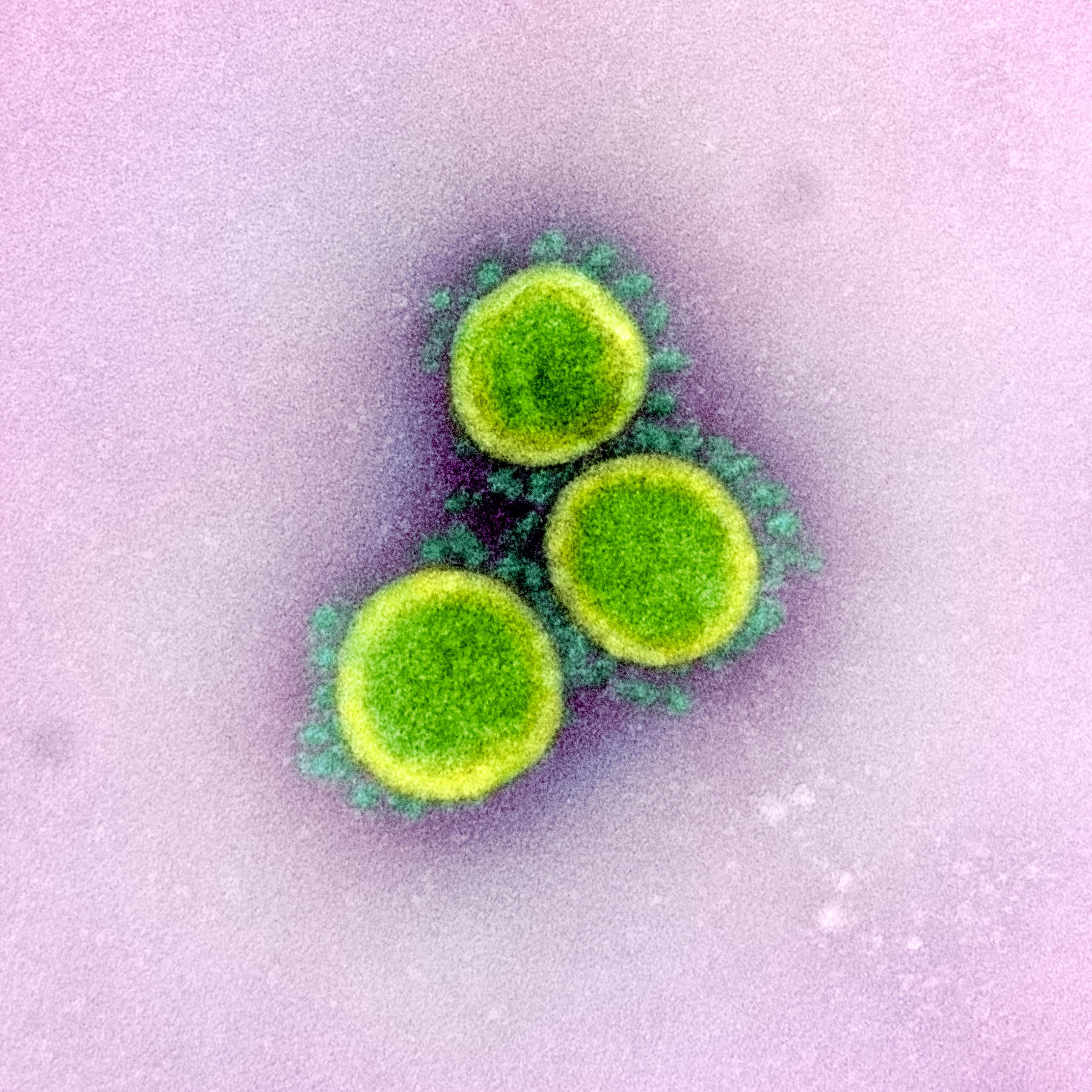
Color-enhanced electron micrograph of SARS-CoV-2 particles from NIAIDFIELD NOTES / 01
The continuing inquiry
Color-enhanced electron microscopy · NIAID · CC BY 2.0
THE RESEARCH AT A GLANCE

A wider view of the evidence.

Browse the collection
1,123Unique research sources

Across the specialty collection

3Sources in new findings

Across the last seven days

40Specialty pages

More ways into the research

1,428Citations across pages
14Findings added · 7 days
3Specialties updated · 7 days
Stored collection last updated Seven-day activity is a rolling window.
01EXPLORE BY SPECIALTY

Follow your questions.

One collection. 40 ways into the research.

Cardiology

63%

COVID-19 survivors had higher cardiovascular hazards than VA controls

In a comparison with VA controls, COVID-19 survivors had a 63% higher hazard of any cardiovascular outcome through 12 months. Hazards were also higher for heart failure, atrial fibrillation, heart attack and stroke.

Absolute event rates for this comparison are not available in this summary, and the study design is not recorded. The comparison with VA controls shows associations, not proof that infection caused each outcome.

Pulmonology

>90%

Most measured lung-function values were normal despite breathlessness

With breathless Long COVID, >90% of measured lung-function values were normal despite lower scores than controls. In a never-hospitalized subgroup, 14/109 (~13%) had a low lung gas-transfer measure (TLCO) and reduced xenon-MRI gas-exchange metrics.

The >90% describes measured values, not people; details of the controls are not available in this summary. The subgroup had otherwise unexplained breathlessness, and a pulmonary contribution was described as only potential.

Vaccinology

Omicron-adapted vaccines: severe-outcome benefits and a myocarditis signal

Versus no Omicron-adapted vaccination, reported effectiveness ranged 16.6% to 67.8% for COVID-19 hospitalization and 26.6% to 75.2% for all-cause mortality. A myocarditis incidence signal was also reported.

Rapid review of adults who were neither pregnant nor immunocompromised. The myocarditis signal involved adults aged 50 years or older. Its uncertainty range was wide and included no increase; its reference group and absolute rate are unavailable here.

View the full specialty index →
A headline finding from each specialty. Populations and comparisons differ; open a takeaway for the full context.

8 of 40 specialties in view
THE RESEARCH, AS IT ARRIVES

Latest studies.

The newest findings added to this collection.
The learning from each, already distilled.

  1. STUDY 01Findings added
    TL;DR

    Vaccination helped, but immunosuppressed adults had higher risks

    Among adults on included immunosuppressive therapies, pooled hospitalization effectiveness versus no vaccination was 88.4%. Versus vaccinated healthy adults, vaccinated patients had higher infection, hospitalization and death risks.

    The systematic review and meta-analysis excluded organ transplant recipients, and heterogeneity was high for all comparisons summarized here.

    Study details & original results

    Stadler, Eva et al.. COVID-19 vaccine effectiveness in people on immunosuppressive therapies: a systematic review and meta-analysis.. The Lancet. Microbe. 2026.

    Pooled vaccine effectiveness versus no vaccination against hospitalisation among adults receiving included immunosuppressive therapies; organ transplant recipients were excluded and heterogeneity was high (I²=73.9%).

    88.4%
    95% CI: 82.8%-92.3%

    Risk of SARS-CoV-2 infection among vaccinated adults receiving included immunosuppressive therapies compared with vaccinated healthy individuals; heterogeneity was high (I²=89.7%).

    RR 1.57
    95% CI: 1.25-1.96

    Risk of hospitalisation among vaccinated adults receiving included immunosuppressive therapies compared with vaccinated healthy individuals; heterogeneity was high (I²=85.5%).

    RR 3.72
    95% CI: 1.63-8.47

    Risk of death among vaccinated adults receiving included immunosuppressive therapies compared with vaccinated healthy individuals; heterogeneity was high (I²=75.2%).

    RR 3.14
    95% CI: 1.51-6.54

    Citation in Vaccinology
  2. STUDY 02Findings added
    TL;DR

    Persistent symptoms did not clearly differ overall by virus

    At 4-6 weeks, clinician-documented persistent symptoms did not clearly differ among children after RSV, SARS-CoV-2, or influenza infection confirmed by PCR testing.

    In this retrospective cohort, age patterns differed: prevalence was highest after RSV among infants and after SARS-CoV-2 among school-aged children. The overall result does not prove equivalence.

    Study details & original results

    Bedir, Firat et al.. Post-acute symptom persistence following SARS-CoV-2, RSV, and influenza in children: A retrospective cohort study.. Medicine. 2026.

    Clinician-documented persistent symptoms 4-6 weeks after PCR-confirmed infection in children; overall prevalence did not differ significantly among the three viruses.

    RSV 24.0%; SARS-CoV-2 22.0%; influenza 21.2% (P = .086)
    95% CI: RSV 22.2-25.8%; SARS-CoV-2 19.9-24.1%; influenza 19.4-23.0%

    Significant virus-by-age interaction in post-acute symptom persistence, with the highest prevalence after RSV among infants and after SARS-CoV-2 among school-aged children.

    P < .001

    Adjusted association between hospitalization and persistent symptoms following pediatric SARS-CoV-2 infection.

    aOR 1.9
    95% CI: 1.4-2.6

    Adjusted association between hypoxemia and persistent symptoms following pediatric RSV infection.

    aOR 2.4
    95% CI: 1.7-3.3

    Adjusted association between age over 6 years and persistent symptoms following pediatric SARS-CoV-2 infection.

    aOR 2.1
    95% CI: 1.5-2.9

    Citation in Pediatrics
  3. STUDY 03Findings added
    TL;DR

    Manufacturing workers with Long COVID reported adverse work outcomes

    42.4%

    In a 797-participant Malaysian survey, 42.4% of manufacturing workers with Long COVID were working while ill (sickness presenteeism), and 24.7% had poor work-related quality of life.

    Absence of a sickness-absence policy was associated with higher odds of adverse work outcomes, while informing employers about a Long COVID symptom was described as protective. Reference groups and the outcome definition are unavailable here; survey associations do not establish policy effects.

    Study details & original results

    Mohd Yusoff, Hanizah et al.. Prevalence and risk factors of adverse work outcomes among manufacturing workers with Long COVID in Malaysia - A nationwide study.. PloS one. 2026.

    Workers with Long COVID who experienced sickness presenteeism

    42.4%

    Workers with Long COVID who had poor work-related quality of life in the 797-participant manufacturing-worker survey

    24.7%

    Adjusted association between informing employers about a Long COVID symptom and adverse work outcomes; the authors described this as protective

    aOR 0.32

    Adjusted association between absence of a sickness-absence policy and adverse work outcomes among workers with Long COVID

    aOR 2.77

    Citation in Occupational Health
  4. STUDY 04Findings added
    TL;DR

    Coinfection was not clearly associated with severe pediatric COVID-19

    Among hospitalized children at centers using systematic multiplex PCR testing, respiratory viral coinfection was not clearly associated with severe COVID-19.

    The reference group for the adjusted comparison is not available in this summary. The result does not prove that coinfection has no effect or that groups were equivalent.

    Study details & original results

    Di Chiara, Costanza et al.. SARS-CoV-2 Coinfections and Severity in Hospitalized Children With Systematic Testing.. The Pediatric infectious disease journal. 2026.

    Respiratory viral coinfection was not associated with increased odds of severe COVID-19 among hospitalized children at centers with systematic multiplex PCR testing.

    aOR 0.94
    95% CI: 0.76-1.15

    Citation in Pediatrics
4 of 12 study updates

Dates show when findings were added here, not when papers were published. Study populations and comparisons differ.

A winding path through a sunlit forestTHE LONGER VIEW
IN FOCUS / LONG COVID

Some questions need
a longer view.

Start with the questions that reach across specialties. The Long COVID guide brings its research and cited sources into one place.

Explore Long COVID Follow the sources. Keep the context.
02FROM THE RESEARCH DESK

Back to the source.

Original publications, visible details.
A place for your next question.

Explore the original publicationsSearch the full papers and publication notices when you want more detail.
30 publications in this selection
  1. 01
    Research paper2026

    Agreement and reliability between the two-day 6-minute incremental step test and two-day cardiopulmonary exercise test in post COVID-19 condition for assessing post-exertional malaise: The REVEAL-study.

    PloS one

    Open original publication in a new tab
  2. 02
    Research paper2026

    Longitudinal assessment of SARS-CoV-2 Spike and Nucleocapsid antigenemia in the ORCHESTRA Post-COVID cohort.

    Clinical microbiology and infection : the official publication of the European Society of Clinical Microbiology and Infectious Diseases

    Open original publication in a new tab
  3. 03
    Research paper2026

    Functional outcomes of children after SARS-CoV-2 infection: An EHR-based cohort study.

    Journal of pediatric rehabilitation medicine

    Open original publication in a new tab
  4. 04
    Research paper2026

    The effect of high-dose of vitamin C on mortality among aged patients with severe COVID-19: A systematic review and meta-analysis.

    Clinical and investigative medicine. Medecine clinique et experimentale

    Open original publication in a new tab
  5. 05
    Research paper2026

    Rhabdomyolysis After COVID-19.

    The Medical journal of Australia

    Open original publication in a new tab
  6. 06
    Research paper2026

    Psychiatric symptoms of long COVID among adults: observational case-control study in Johannesburg, South Africa.

    BJPsych open

    Open original publication in a new tab
Feed snapshot · Sep 17, 2026 UTC
THE RESEARCH BRIEFING

A moment to
take it all in.

Step back from individual papers. Explore published briefings from the research archive.

Read the briefings
THE MODERNDOC APPROACH

A closer look.
A clearer perspective.

Read our approach
01

The source stays in view.

Every finding belongs to a particular paper. Follow it back to the original research.

02

Context comes with the number.

Keep the population, comparison and uncertainty alongside the result.

03

The limits belong here, too.

AI-assisted evidence summaries are not a clinician endorsement or a personal treatment recommendation.